Just Existing: Why Watching Someone Do Absolutely Nothing Is the Most Compelling Thing Online Right Now
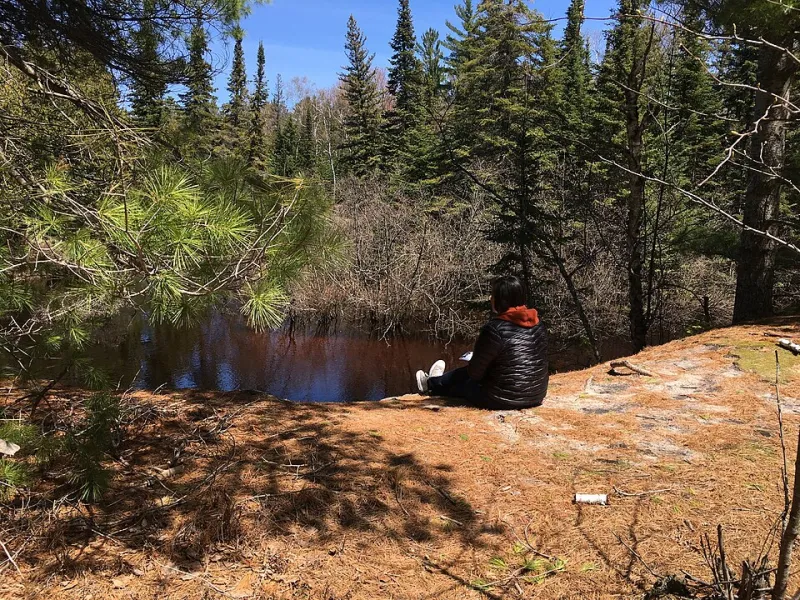
Photo: NPS, Public domain, via Wikimedia Commons
The video has 2.3 million views. In it, a woman sits at her kitchen table, drinks coffee, and stares out the window for about four minutes. There's ambient noise — a distant car, the hum of a refrigerator, the occasional sound of ceramic on wood. Nothing happens. Nobody speaks. The comments are full of people saying it's the most relaxing thing they've watched all week.
This is where we are. And honestly? It makes complete sense.
The Exhaustion Nobody Was Talking About
For years, the internet rewarded maximum effort. Every video was competing for attention against every other video, which meant everything had to be louder, faster, more edited, more dramatic, more optimized than whatever came before it. The thumbnail had to scream. The hook had to land in three seconds. The pacing had to be relentless. The personality had to be enormous.
Creators burned out. Audiences burned out watching creators burn out. And somewhere in the wreckage of all that optimization, people started craving the opposite — content that didn't demand anything from them, that didn't try to sell them an emotion or a product or a version of someone's best self.
They started craving nothing. Real, honest, unperformed nothing.
The Anti-Content Content
Call it slow content, ambient video, ungated vlogging, or just "the nothing-happening genre" — the format has exploded across platforms in the last couple of years in ways that nobody really predicted.
Livestreams of people studying alone. Hours-long videos of someone cleaning their apartment without commentary. Morning routine vlogs that are genuinely just morning routines, unscored, unnarrated, without a single tip about productivity or a mention of the sponsored app that made it all possible. "Study with me" videos where the whole appeal is that nothing interesting happens.
Lofi hip-hop was an early version of this — the animated girl at the desk became a whole aesthetic built around the comfort of witnessing someone else's quiet focus. But what's happening now is more personal and more radical. It's not just ambient music over a loop. It's actual people, actually existing, with all the mundane texture that implies.
Dishes get washed. Rain hits windows. Someone hums to themselves off-key and doesn't edit it out.
Why It Hits Different
There's a psychological concept called "co-regulation" — the way humans naturally calm down when they're in proximity to another calm person. It's why babies stop crying when you hold them, why sitting with a friend in comfortable silence feels restorative, why libraries have a particular energy that's hard to replicate.
The nothing-happening video is essentially digital co-regulation. You're not alone in your apartment, you're alone with someone else who's also just... being. And something about that presence, even mediated through a screen, does something real to the nervous system.
People who watch these videos describe them in almost identical terms: calming, grounding, like background company without the social pressure. The key word is pressure. Traditional content creates pressure — to laugh, to react, to feel something, to want something. The nothing-happening video removes all of that. It's permission to just exist alongside someone else's existing.
Music's Version of This
The music world has its own version of the boredom economy, and it's been building for a while. Ambient music has always existed, but the appetite for it has grown dramatically — not just as background sound but as the main event. Artists like Sault, Grouper, and Floating Points have found significant audiences for music that prioritizes texture and space over hooks and momentum.
On streaming platforms, playlists with titles like "rain sounds for focus" and "studying in a coffee shop" routinely pull enormous numbers. The appeal isn't the music exactly — it's the environment the music creates. It's sonic co-regulation.
And increasingly, musicians are creating content to match. Studio livestreams where nothing dramatic happens — someone plays piano for a while, adjusts levels, takes a break, comes back. No performance, no announcement, no reason to be watching except that it feels good to be there.
Billie Eilish's early ASMR content was a mainstream version of this. The intimacy wasn't in the information she shared — it was in the quietness of the format itself. The sense that you were just... nearby.
The Performance of Not Performing
Here's the complicated part: the nothing-happening video isn't actually nothing. It's a very specific something — a carefully selected, usually aesthetically considered slice of ordinary life that has been framed and chosen for its particular quality of ordinariness.
The woman drinking coffee at the window picked that angle. Someone chose not to edit out the refrigerator hum. The lighting is usually good. The space is usually clean in a way that feels lived-in rather than staged. It's not accidental — it's curated anti-curation.
Which means the most successful practitioners of the nothing-happening genre are people who are very good at performing the absence of performance. That's a skill. A subtle, weird, increasingly valuable skill.
The audience knows this, at least intuitively. The comments on these videos often include some version of "I know this is content but it doesn't feel like content" — which is maybe the highest compliment the format can receive.
What the Nothing Is Actually Saying
The rise of ambient, ungated, slow content isn't just a trend. It's a response to something real — a collective exhaustion with the relentless optimization of experience, the sense that every moment online is supposed to be teaching you something or selling you something or making you feel something specific on command.
People want rest. Not sleep, exactly — rest. The feeling of being somewhere without having to perform being there. The nothing-happening video offers a version of that. It's a space where nothing is required of you, where existing is enough, where the quiet is the point.
In a media landscape built entirely around capturing and holding attention, choosing to offer something that barely tries to hold your attention is almost radical. And the fact that it's working — that people are staying, watching, returning — says something about what we're actually looking for underneath all the noise.
We don't want more. We want less. We want someone to just be there.
Turns out that's the hardest thing to fake.