Getting Weird on Purpose: Why Human Chaos Is the One Thing AI Will Never Catch Up To
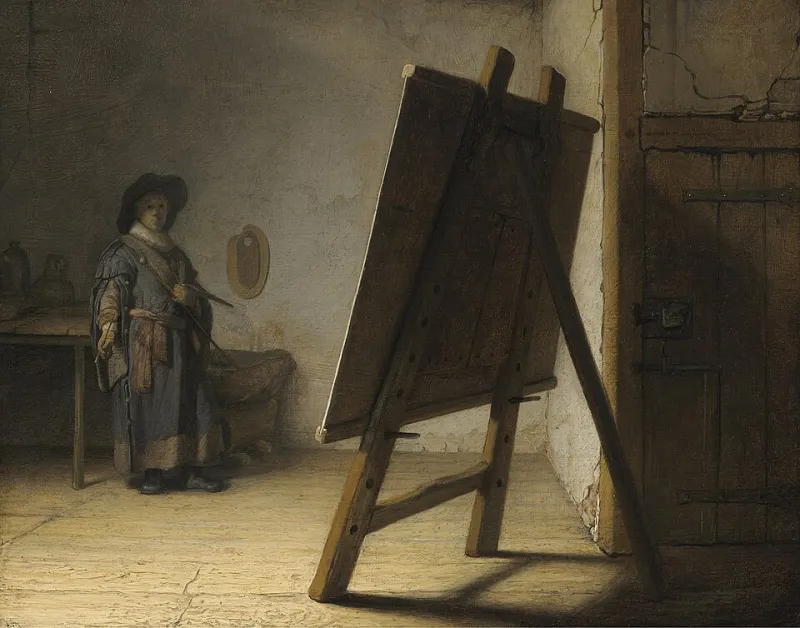
Photo: Rembrandt, Public domain, via Wikimedia Commons
Somewhere in the middle of a 47-minute YouTube video essay about the semiotics of early 2000s cereal box mascots, you realized something. You weren't watching it because it was polished. You were watching it because it was unhinged — and because no algorithm, no matter how well-trained, could have generated the specific energy of a person who cares this deeply about Toucan Sam.
That's the moment the shift started making sense.
The Flood Is Real, and It's Already Here
Let's not sugarcoat it. AI-generated content is everywhere, and a lot of it is genuinely competent. Spotify playlists are quietly filling up with tracks that were built in data centers rather than bedrooms. Stock photo sites have essentially become AI art galleries. YouTube Shorts, TikTok feeds, and Instagram Reels are cycling through videos that were assembled, not created — optimized to the pixel for retention without a single human fingerprint on them.
The content is fine. That's the whole problem. It's smooth and frictionless and completely forgettable the second it ends.
And independent creators noticed. Fast.
The Pivot to Peculiar
There's a new creative strategy emerging, and it doesn't have a clean name yet, but it looks something like this: double down on the stuff that makes you you, specifically the parts that are hardest to explain, hardest to justify, and hardest to replicate.
Musicians are leaning into their weirdest sonic choices — the ones a label A&R would cut in the first meeting. Visual artists are deliberately leaving in the brushstroke errors, the color decisions that don't quite work, the asymmetry that makes your eye twitch. Filmmakers are shooting on formats that introduce noise and grain and beautiful, ugly unpredictability.
This isn't an aesthetic accident. It's an arms race.
When everything generated by a machine sounds like a competent version of something you've already heard, the only move left is to sound like nothing anyone has ever heard before — including yourself from six months ago.
Authenticity as Infrastructure
For years, "authenticity" was the most overused word in creative marketing. Every brand wanted it. Every influencer claimed it. It became a performance of realness that was, ironically, completely fake.
But here's what's different now: authenticity has stopped being a brand value and started being a survival mechanism.
Creators who are thriving in the current landscape aren't just being "real" for the optics. They're building entire creative identities around specificity — the kind of hyper-personal, niche-within-a-niche references and sensibilities that an AI model trained on broad datasets literally cannot reproduce. An AI can generate a folk song. It cannot generate your folk song, the one that references the specific heartbreak you had in a Waffle House parking lot in Chattanooga at 2am in 2019.
That specificity is infrastructure now. It's the foundation of an audience relationship that no amount of algorithmic content can disrupt, because the audience isn't just there for the content — they're there for you, the weird, specific, unreplicable you.
The Flaw Is the Feature
There's a music producer out of Atlanta named Satchel Brown who went semi-viral earlier this year for a track that included, very deliberately, a section where his recording software visibly crashed and recovered mid-beat. He kept it in. The comments exploded — not because it was a mistake, but because it was proof.
Proof that a human made this. Proof that something real happened in the room.
This is the new creative currency: evidence of humanity. The crack in the voice. The frame that's slightly out of focus. The joke that only lands if you know the inside context. The reference that will alienate 70% of your potential audience and absolutely lock in the 30% who get it.
AI optimizes for broad appeal. The counter-move is radical specificity.
What This Means for Entertainment, Long Term
Here's the uncomfortable question underneath all of this: if human weirdness becomes the premium product, what happens to the middle?
The mid-tier content — competent, produced, technically solid but not especially distinctive — is the stuff most at risk. It was always competing on quality. Now quality is table stakes that a server farm can clear without breaking a sweat. The content that survives is either AI-generated at scale (cheap, fast, disposable) or aggressively, defiantly human (weird, specific, irreplaceable).
The boring middle is getting hollowed out, and the entertainment landscape is going to look a lot more polarized because of it.
For independent creators, that's actually good news — if they're willing to commit to the weird. The audience for genuinely human, genuinely specific creative work is not only still there, it's actively hungry for it. People are exhausted by smooth. They're seeking out rough edges like they're a resource.
The Weird Ones Win
The creators who are going to define the next five years of entertainment aren't the ones who figured out how to compete with AI on AI's terms. They're the ones who understood, early, that the competition itself was a trap.
You can't out-efficient a machine. But you can out-human one.
So go ahead and make the 47-minute video about cereal box mascots. Record the song that only makes sense if you grew up in a specific zip code. Build the art project that has no market and too many feelings. Leave the imperfections in.
The algorithm became the artist. The only response is to become something the algorithm doesn't have a category for.