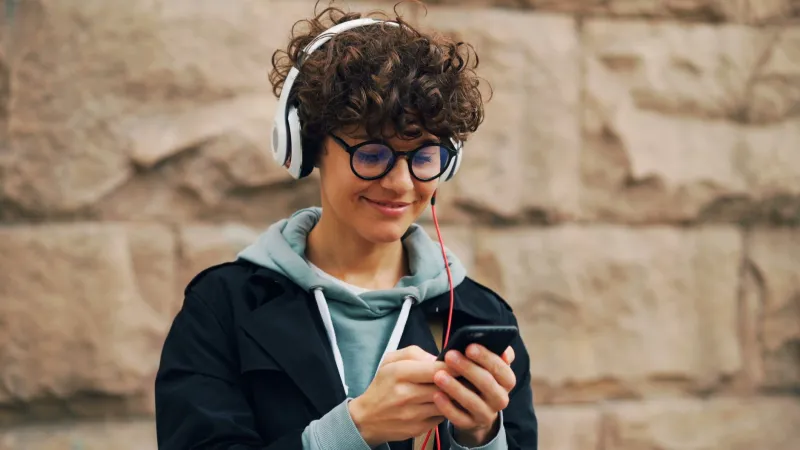
There's a specific feeling you get when you hear a song on TikTok for the 47th time before it's technically out. You already know every word. You've already assigned it an emotion. By the time the official music video drops and the Spotify stream count starts climbing, you're almost bored of it — in the best possible way. That's not a bug. That's the whole game now.
Something seismic has shifted in how music lands in culture, and it didn't happen in a boardroom or a recording studio. It happened in comment sections, on For You pages, and through 15-second audio clips that somehow carry more emotional weight than a fully produced, mastered, radio-ready single. TikTok sounds aren't just promotional tools anymore. For a growing number of artists, they are the art.
The Clip That Hits Before the Song Exists
Let's talk about Olivia Rodrigo for a second. Before "drivers license" was a certified cultural event, it was a voice memo energy — raw, confessional, almost uncomfortably personal. When it started spreading on TikTok, listeners weren't reacting to a polished pop product. They were reacting to something that felt unfinished in all the right ways. The production was clean enough, sure, but the emotional roughness? That's what TikTok amplified. The app turned a debut single into a generational moment not because of a marketing campaign, but because the audio itself was built for that kind of intimate, repeat-listen environment.
SZA's story is even wilder. Snippets from what would eventually become SOS were circulating on TikTok way before the album dropped — and fans didn't just passively consume them. They stitched, dueted, theorized, and essentially co-wrote the cultural narrative around the music in real time. By the time the official release hit, the album already had lore. That's a phenomenon that no traditional rollout strategy could manufacture.
Why the Unfinished Version Wins
Here's the uncomfortable truth the industry is slowly sitting with: polish can actually kill momentum. When a track gets the full label treatment — the mixing, the mastering, the radio edits, the carefully timed press cycle — something often gets sanded down in the process. The weird breath before a chorus. The slightly pitchy note that makes you feel something. The lyric that sounds like it was written at 2 a.m. and never revised.
TikTok, by contrast, thrives on texture. A lo-fi snippet played over someone's morning routine hits different than the same song in a Spotify playlist between two other perfectly produced tracks. Context matters enormously on the app, and the audio that performs best tends to be the audio that leaves space for the listener to project themselves into it.
This is why demo leaks, fan-captured live performances, and even voice memo recordings regularly outperform their studio counterparts in terms of raw engagement on the platform. It's not that people don't appreciate quality — it's that "quality" has been redefined. Authenticity is now a production value.
Artists Are Adapting (Whether They Want To or Not)
Some artists figured this out early and leaned in hard. Doja Cat practically built her second act around TikTok audio virality, understanding that a sound attached to a meme or a trend has a longer shelf life than a single pushed through traditional channels. Ice Spice's entire early career was essentially a TikTok sound rollout strategy — short, punchy, highly quotable tracks that were engineered (consciously or not) for clip culture.
But plenty of artists are still being dragged into this new reality against their will. There's a certain type of legacy artist who watches a deep cut from their catalog go viral on TikTok and feels genuinely confused — why that song, why now, why in 15 seconds? The answer is that the app's algorithm doesn't care about your rollout timeline or your artistic intent. It cares about what makes people stop scrolling, and sometimes that's a bridge from a B-side recorded in 2019.
Labels are now doing something that would have seemed absurd a decade ago: A&R teams are monitoring TikTok sounds the way they used to monitor college radio play. If a clip is gaining traction, the conversation immediately shifts to how to capitalize on it — which sometimes means rushing an official release, and sometimes means deliberately not releasing a full song to let the anticipation build.
Discovery Is Personal Again (And That's Huge)
One of the things TikTok audio culture has genuinely given back to music is a sense of personal discovery. Streaming platforms made music incredibly accessible but also kind of anonymous — you'd add something to a playlist and forget where you heard it. TikTok puts music back into a social, contextual frame. You hear a sound because someone you find funny or relatable used it. That association sticks.
This is why TikTok-discovered music tends to feel more personally meaningful to younger listeners than something they found through an editorial playlist. The discovery story is built into the experience. "I found this through a video about someone's weird commute" is a more emotionally resonant origin story than "Spotify suggested it."
For artists, especially independent ones, this represents a genuine leveling of the playing field — at least in theory. A bedroom producer can have their audio go viral and rack up millions of uses before they've ever spoken to a label. The gatekeeping that used to define music industry access is genuinely porous now in ways it never was before.
What Comes Next
The music industry isn't going to stop making polished studio albums, and TikTok isn't going to replace the album format entirely. But the relationship between the two has fundamentally changed. The app is no longer just a marketing channel — it's a primary site of cultural meaning-making around music, and the sounds that live there are shaping what gets made, how it gets made, and what "success" even looks like.
Artists who understand this aren't dumbing their music down for the algorithm. The smart ones are thinking about what a song feels like in a clip before they think about what it sounds like in a playlist. They're writing for the moment of recognition — that split second when someone hears two bars and immediately reaches for the "use this sound" button.
That's the new A&R instinct. And honestly? Some of the music coming out of it is genuinely great — precisely because it's built around emotional immediacy rather than industry convention.
The app sound is the single. The single is the sound. The line between them dissolved somewhere around 2021, and music has been more interesting ever since.