Cracked Edges, Full Price: How 'Unfinished' Became the Most Coveted Aesthetic Online
Scroll your feed for about thirty seconds and you'll catch it. The slightly blown-out photo. The bedroom recording where you can hear the HVAC unit humming in the background. The Canva graphic that looks like someone made it at 2 a.m. and absolutely did not care. And somehow — somehow — it's the most compelling thing you've seen all day.
We are living through a full aesthetic revolt. The immaculate, brand-approved, color-graded-within-an-inch-of-its-life content that dominated the 2010s Instagram era is losing its grip. In its place, something rawer, stranger, and honestly more interesting has taken over. Gen Z artists and creators aren't just tolerating imperfection — they're engineering it. And that shift tells us something pretty significant about where culture is actually headed.
The Polished Era Left a Bad Taste
To understand why rough edges feel so fresh right now, you have to remember just how exhausting the opposite became. For about a decade, the dominant visual language of creative culture online was aspirational to the point of being alienating. Everything was golden hour lighting, perfect skin, curated flat lays, and production values that made your average bedroom musician feel like they needed a $10,000 setup just to be taken seriously.
Brands colonized that aesthetic until it stopped meaning anything. When every wellness startup, fast fashion label, and mediocre influencer is running the same soft-focus, pastel-toned visual playbook, the whole thing collapses under its own weight. Perfection became a red flag — a signal that something was being sold to you, not shared with you.
Gen Z clocked this early. And they responded the way they usually do: by going in the complete opposite direction.
Lo-Fi Isn't a Limitation Anymore — It's a Flex
Bedroom pop didn't just survive the streaming era — it became one of its defining sounds precisely because it sounded like it came from a bedroom. Artists like Clairo built entire careers on the deliberate grain of a laptop microphone and the intimacy that comes with it. That wasn't a workaround. That was the whole point.
The same logic has spread far beyond music. On TikTok, the most viral fashion content right now often looks like it was shot on someone's older phone, styled with thrifted pieces thrown together without a stylist in sight. Zine culture is having a genuine renaissance — photocopied, hand-lettered, stapled in the middle, and more culturally resonant than a lot of polished editorial work. Digital artists are deliberately incorporating compression artifacts, scan lines, and visible grain into work they could just as easily make pristine.
This isn't laziness. It takes real intentionality to make something feel authentically unfinished rather than just sloppy. There's a craft to the no-craft look, and the people doing it best understand that distinction completely.
The 'Work in Progress' as a Finished Product
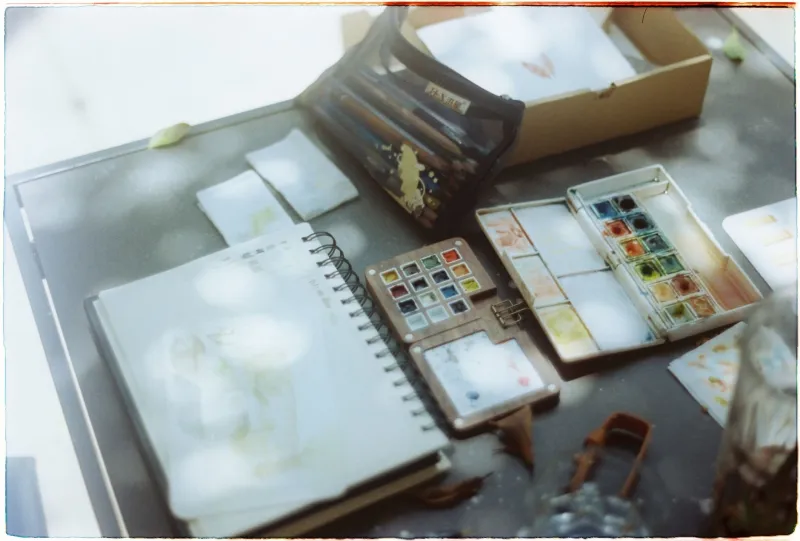
One of the most interesting moves in this whole aesthetic shift is how creators are reframing the work-in-progress as the actual deliverable. Sharing sketchbook pages, unedited voice memos, half-finished paintings, raw footage — these aren't teasers anymore. They're the content.
This does something really specific to the relationship between creator and audience. It collapses the distance. When you see someone's messy process, their crossed-out lyrics and their failed takes, you're not just consuming their output — you're inside their creative world. That feeling of access is worth more to a lot of people than a perfectly executed final product that keeps you firmly on the outside looking in.
It also reframes failure in a genuinely healthy way. When the process is visible, mistakes aren't embarrassing — they're part of the narrative. That's a cultural correction that honestly feels overdue.
Authenticity as the New Status Symbol
Here's the part that gets really interesting from a cultural economics standpoint: the unpolished aesthetic has become its own kind of luxury signifier. Not in the traditional sense of expensive materials or exclusive access — but in the sense that genuine creative energy is increasingly rare and therefore increasingly valuable.
Anyone can pay for slick production. Not everyone has a real point of view, a distinct creative voice, or the confidence to put something raw into the world and stand behind it. The DIY aesthetic signals all of those things simultaneously. It says: I made this myself, I meant it, and I wasn't trying to impress a brand partnership committee.
In a content landscape absolutely drowning in AI-generated imagery and algorithm-optimized everything, the human fingerprint — the slight imperfection that proves a person actually touched this thing — carries serious weight. Collectors in the digital art space are noticing it. Independent music listeners are seeking it out. Even fashion, an industry historically obsessed with technical perfection, is seeing it in the rise of visible mending, raw hems, and deliberately distressed pieces that celebrate their own wear.
The Corporate Knock-Off Problem
Of course, the moment a genuine cultural aesthetic gains traction, the machine notices. And right now, brands are absolutely trying to reverse-engineer the unpolished look for their own campaigns. You've seen it — the major label artist dropping a "raw" acoustic session that was clearly lit by a professional crew. The fast fashion brand posting "candid" behind-the-scenes content that was storyboarded three weeks in advance.
Creators and audiences are getting pretty good at spotting the difference, though. Performed authenticity has its own tell — it's too consistent, too clean in its messiness, too careful about which imperfections make the cut. Real rough edges have a randomness to them that's hard to fake convincingly at scale.
This is actually what keeps the aesthetic vital. The moment it becomes fully corporatized, it'll mutate into something new. Gen Z's relationship with visual culture moves fast enough that by the time a trend gets a brand deal, the originators have usually already moved on.
What This Really Says About Us Right Now
Strip away the aesthetics conversation and what you're really looking at is a generation that grew up being sold a version of perfection — perfect bodies, perfect homes, perfect highlight reels — and collectively decided they were done performing it.
The embrace of imperfection in creative work isn't just a visual preference. It's a values statement. It's saying that process matters, that struggle is real, that the gap between who you are and who you're pretending to be is exhausting and not worth it anymore.
And honestly? That hits different than any glossy campaign ever could.
The cracked edges aren't a flaw in the work. They're proof that a human being made it. In 2025, that might just be the most valuable thing a piece of creative work can offer.