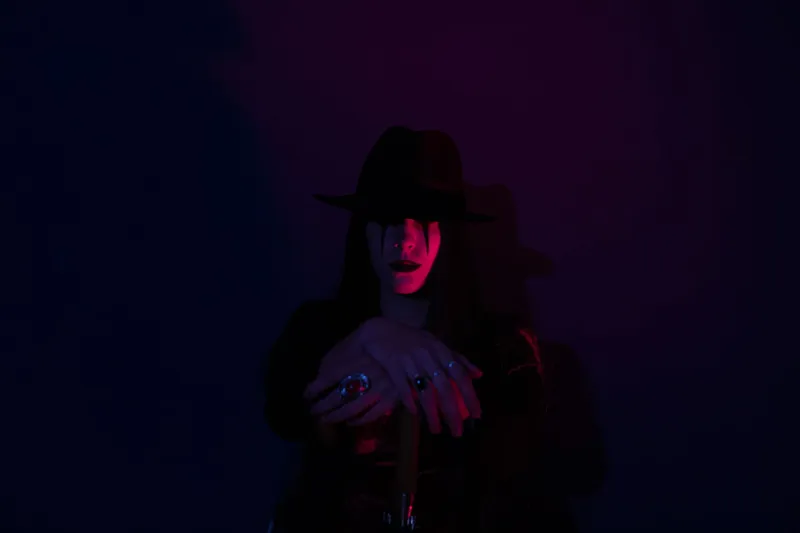
Let's be real for a second. When was the last time you finished a show and your favorite character was the morally correct one? The one who made good choices, told the truth, and didn't absolutely destroy everyone around them for sport? If you're struggling to remember, you're not alone — and you're definitely not the problem.
Something genuinely weird has happened to the way we consume entertainment. The hero is out. The antihero is getting old. What we actually want — what streaming platforms are quietly engineering for us — is the villain. Full stop. Give us the chaos agent, the manipulator, the one who looks the camera dead in the eye while doing something completely unhinged. We will eat that up every single time.
Welcome to the villain era. Population: all of us.
The Characters We Were Told to Hate (But Absolutely Didn't)
Let's start with the obvious ones. Saltburn dropped in late 2023 and broke the internet not because audiences were horrified by Oliver Quick — but because half of them were openly rooting for him. Barry Keoghan's Oliver is manipulative, calculating, and deeply unsettling. He is also, by every conventional storytelling rule, the antagonist. He is the person you are not supposed to like.
And yet.
TikTok was flooded with Oliver edits. The discourse wasn't "how could he do that" — it was "okay but he was right though." People were analyzing his psychology like he was a protagonist who deserved our empathy. Which, maybe, is the whole point.
Then there's Euphoria's Cassie Howard, who spent season two making choices so catastrophic and self-destructive that she became the most-discussed character on the show. Not Rue, the actual protagonist. Cassie — the girl who slept with her best friend's ex, who lost herself completely in someone else's validation, who had a full public breakdown in a bathroom while dressed like a Disney princess. People weren't just watching Cassie. They were seeing themselves in her. And that's where things get interesting.
Moral Complexity Is Just Better TV
Here's the thing about a "good" character: they're often just boring. Goodness, written without nuance, doesn't generate conflict. It doesn't generate conversation. It definitely doesn't generate the kind of parasocial obsession that keeps a streaming platform's numbers up through a full content drought.
Writers have always known this. Walter White. Tony Soprano. Amy Dunne. These aren't new archetypes. But what's shifted is the framing — and more importantly, the audience's willingness to consciously acknowledge that they're rooting for someone they probably shouldn't be.
Gen Z didn't invent moral ambiguity in fiction, but they did something older generations were less comfortable with: they stopped pretending to root for the hero when they weren't. There's no performance of "oh, I know he's bad, but..." anymore. It's just "he's my favorite" and moving on. That honesty is actually kind of refreshing.
Streaming Platforms Know Exactly What They're Doing
Netflix, Hulu, HBO — none of this is accidental. The deliberate blurring of protagonist and antagonist is a feature, not a bug. When you can't cleanly identify who you're supposed to root for, you keep watching. You keep theorizing. You keep coming back.
You on Netflix is maybe the clearest example of this architecture. Joe Goldberg is a stalker. A murderer. The show frames his interiority in first person — we hear his thoughts, we understand his logic, we follow his perspective — and then has to actively remind us through plot consequences that he is, in fact, the villain. But Penn Badgley has spoken about how audiences still DM him romantic messages, still root for Joe to "find love," still want the best for a character who is, by any reasonable measure, terrifying.
The platform knows this. That tension — between our emotional investment in Joe and our intellectual knowledge that he's a monster — is what keeps You renewed season after season.
Why We Actually Relate to the Antagonist
Okay, so here's the uncomfortable part. Why do we connect with these characters so deeply? Because the villain, more often than the hero, is allowed to feel things fully.
Heroes in traditional storytelling suppress. They sacrifice. They put others first. Which is admirable, sure, but it's also not particularly relatable to a generation that has been told to hustle until they break, perform wellness on social media, and maintain emotional composure through a pandemic, a recession, and a political landscape that changes every 48 hours.
The villain? The villain wants something and goes and gets it. The villain has desires they don't apologize for. The villain is usually the most emotionally honest person in the room — even if the emotion is rage, jealousy, or a deeply specific kind of grief that curdled into something dangerous.
Cassie's desperation to be loved is something a lot of people feel. Oliver's obsession with belonging to a world that's kept him at arm's length? Deeply familiar. We're not rooting for their methods. We're rooting for the part of them that wanted something real and went about getting it in the most chaotic way possible.
The Morality Question (Or: Are We Okay?)
Look, the obvious concern here is what this says about us culturally. If we're all out here simping for the manipulator and rolling our eyes at the hero, does that mean our moral compass is busted?
Probably not. Fiction has always been a safe space for us to explore the parts of ourselves we don't act on — the jealousy, the ambition, the desire to blow everything up and start over. Rooting for a fictional villain doesn't mean you're going to start scheming IRL. It means you found a character who made you feel something true.
What it does say is that we're tired of being told who to admire. We're suspicious of easy goodness, maybe because we've seen too many "good" institutions fail us. A character who is openly complicated, openly selfish, openly working through something ugly — that feels more honest than a hero who's just... fine.
The Villain Is the New Mirror
At the end of the day, the villain era isn't really about glorifying bad behavior. It's about demanding more complex storytelling — and responding viscerally when we get it. We want characters who contain contradictions. We want people on screen who want too much and feel too hard and make choices that make us wince because somewhere, in some version of ourselves, we get it.
The hero can keep their moral high ground. We'll be over here in the comments section writing 400-word defenses of the character who was definitely wrong but also kind of wasn't.
Villain era. We're not leaving.